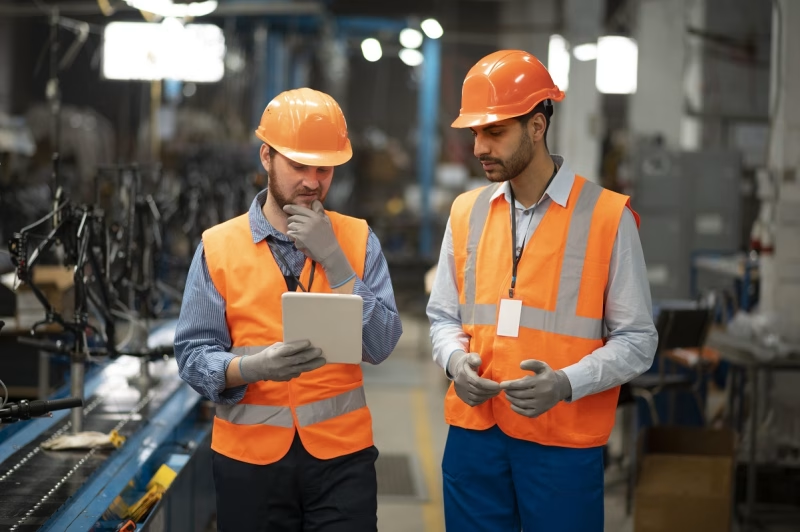
To ensure that automatic plate rolling machines are produced to the highest quality standards, operate efficiently, and are reliable for many years in the future, risk analysis in manufacturing these machines is critical.
The complexity of manufacturing these machines can affect their ability to be manufactured correctly due to their inherent intricacies. Factors affecting how well a product will be produced include: misuse by human operators during the manufacturing process, production equipment’s ability to operate correctly, how much time is spent on each task within the entire manufacturing process, how good the materials are that are being used in production, and what type of environment production is performed in.
To reduce types or amounts of defects and to keep down costs in production all risks must be identified early in the production cycle so as to put in place preventative actions to avoid defects/minimize downtime/control costs.
The use of a systematic approach to risk analysis will not only provide more consistently manufactured products but will also improve the safety and overall performance of the fabrication industry.
1. Machine (Equipment) Risks in Manufacturing of Automatic Plate Rolling Machines
Risks associated with machines have a significant impact on manufacturing automatic plate rolling machinery; if the equipment fails for any reason, production quality will suffer, or the production schedule will be delayed. If the CNC control system fails for any reason, automatic operations are interrupted, and the end result is that the plates will not be rolled correctly.
If hydraulic systems leak or lose pressure, the force required to form plates can be reduced. If the rollers become misaligned or worn, the finish of the plate produced may not have as much detail or may be much less consistent. The failure of the parts of the electrical circuitry used to control production can cause complete breakdowns in the entire production operation leading to significant machine downtime and repair costs.
Machines that are not adequately calibrated could create dimensional inconsistencies and any unexpected failure of any equipment will affect production schedules and reduce efficiency in the manufacturing operation.
2. Human and Operator Risks in Automatic Plate Rolling Machine Manufacturing
Without taking human or operator related risks into consideration, as long as they’re correctly managed, they could cause and/or have an adverse impact on and/or significantly affect the individual quality and/or safety of output produced from automatic plate rolling machine production. Due to insufficiently skilled technicians or operators, production operations usually lack efficiency and the resulting potential for errors is increased.
When a machine has incorrect programming or set-up, it could create mistakes when rolling and waste some of the material being used. Also, if a machine has the wrong ability to put together all of the pieces, then this will weaken the machine’s base strength and structure. To detect any defects with the machine prior to operation, each component must be properly inspected and tested before being put into operation. Those who are inexperienced with advanced machinery and technology will not have the ability to use all of the features and advancements created by technology.
To minimize human error, it is important to provide employee training, have procedures used correctly, and create a culture of safety for the employee. Additionally, if employees do not operate their machines per established safety protocols, there can be accidents or damage to the machines, along with delaying production while machines are operating.
3. Method Process related Risks
There are many risks associated with the production of automatic plate rolling machines that can negatively affect the product’s quality, uniformity, and overall efficiency of production. Inefficient manufacturing procedures can increase production time, increase costs, and reduce output. Poorly built or assembled machines can create poor-performing, structurally weak machines.
The lack of SOP’s (Standard Operating Procedures) would make the output of machines dependent on the individual running the machines rather than on established standards. Poor workflow planning contributes to delays, bottlenecks, and poor resource management. Lack of quality assurance may allow defects to be produced without being detected which would require rework or lead to product failure.
Errors introduced at the time of designing and implementing a product can have a negative impact on the ability of that product to function properly and maintain its intended level of reliability. Implementing well-defined procedures and optimizing the process flow will help to mitigate process-related risk, along with establishing a solid quality assurance (QA) process.
4. Raw Material Related Risks
The production of automatic plate rolling machines is impacted by risks associated with materials, as the performance and working life of the machine are reliant on raw materials being of a certain standard. For example, if inferior quality materials are used to manufacture the machine, there could be a loss in structural strength or integrity; furthermore, if the thickness and/or strength of the material could differ, this would create problems with consistency in machining and assembly.
Additionally, should a component manufactured by a supplier prove to be faulty, this could threaten the reliability of the machine and increase the likelihood of it failing to work correctly. Should corrosion-prone materials be selected for the construction of critical elements, these parts’ service life will be greatly reduced under harsh operating conditions.
Moreover, changes in properties of manufactured materials such as hardness and tensile strength can impact the repeatability of the result of machining or forming a mechanical component. Moreover, interruptions in supply chain can impact production schedule/delivery times in a negative manner.
5. Quality Control Measurement Risks
Uncontrolled measurement and quality assurance risks can significantly affect the accuracy and reliability of the manufacturing process in terms of how well automatic plate rolling machines operate. Accurate measurement tools can lead to dimensional issues (e.g., parts will not fit together properly), whereas improperly calibrated tools and sensors will provide unreliable readings and inconsistent end results. In addition, a lack of precision in testing equipment limits the ability to identify problems during early detection phases.
Defective parts can be produced because of human error in part inspection and can lead to an increase in the chance of a part failing/needed to have been done in assembly. Automated quality checks can be done effectively on automated plate rolling machines. Every checks are measured using cnc control system and can be stored, or saved in records. This can be used for ensuring quality control.
The implementation of accurate measuring devices and instruments, a planned schedule to calibrate all measuring devices, an automated inspection system, and adequate documentation practices are needed to ensure consistency in the manufacturing process.
6. Hazardous Workplace related Risks
Unchecked environmental hazards can drastically impact the quality of manufactured goods and the efficiency of equipment used for automatic plate rolling. The equipment that is utilized for operating usually experiences the buildup of dirt and other debris in addition to the moving parts. In fact, when you have the buildup of dirt or some level of imperfection within your equipment, this can cause a great deal of friction, work, or stress to occur on these components of your equipment thus leading to premature failure in these components or not operating as originally designed.
Environmental conditions, i.e. temperature or moisture, will also impact how the material with which your equipment was manufactured will react or change with time; therefore, your equipment will be used differently and ultimately have differences in the size of the product produced based on the equipment made.
Insufficient lighting/poor air circulation could reduce operational productivity (operator error) and increase the probabilities of mistakes. A manufacturing facility can be adversely impacted when there is an unreliable source of electricity that can cause the breakdown of machinery, the destruction of equipment, or the loss of data. Therefore, it is important that you do everything possible to create a safe environment for yourself and others in order to prevent injuries and/or stop the manufacturing process, as well as to prevent your products from being damaged when they are not in use until they can be used properly.
Keeping your work area tidy, orderly and under control is also critical to not only reducing your risk of coming into contact with any environmental hazards, but also for successfully making products.
7. Organizational management Risks
Risks associated with management activities can greatly impact the effectiveness and success of producing automated rolling steel plate machinery. Poor planning and scheduling of projects can create missed deadlines, misallocation of resources, and an increase in the costs of operating machinery. An ineffective management of the workforce can lead to a lack of utilization of skilled labour and a decrease in productivity.
The failure to invest properly in new technologies will restrict innovation and prevent a company from utilizing the most productive methods of producing machinery. If the quality control system is not strong enough then defective machines can be produced which will not allow the finished product to be reliable. Additionally, if there are delays in making decisions the plant will be hindered in its operation due to disruption of work flow. Lastly since there is little to no communication between different departments this creates miscommunication, errors and inefficiencies. Therefore, it is vital that there are good management practices, a sound method of communication, and strategic planning to manage these risks associated with producing machinery.
8. Tooling & Components Risks
The quality of the components and tooling used in manufacturing automatic plate rolling machines greatly affects both reliability and performance. Poor-quality rollers and components can contribute to an early breakdown of the machine, which affects the longevity of the machine.
The selection of incorrect tooling or performing operations that use incorrect tooling will also contribute to inaccuracies and inefficient operations. If tooling has been used over an extended period without being inspected or replaced, there is potential for a lack of precision and consistency. Furthermore, if tooling is not maintained properly through regular routine maintenance, this will also result in more frequent breakdowns and delays in production. Also, misalignment of any one important part can lead to either accurate but inoperable; or functional but inaccurate operation for the entire machine.
Manufacturers must utilize good quality parts and choose proper tooling for their specific process to maintain routine preventive maintenance, both of which reduce risk and provide consistent results.
Conclusion
To summarize, conducting a thorough risk analysis in order to manufacture automated plate rollers will maximize consistent product quality, process efficiency and machine reliability over time. Manufacturers can minimize defects, reduce down time (lost business), and lower back-ordered products by identifying and mitigating potential risks throughout every aspect of the business including machinery, human factors, processes, materials, quality assurance/quality control, working environment, management and tooling.
The use of advanced technology combined with a well-trained workforce, adhering to a strong set of quality requirements and establishing clearly defined processes will not only improve the performance of their products, but will also enhance the resilience of their overall manufacturing operations. A comprehensive risk management system will enable manufacturers to produce high-precision and long-lasting automated plate rolling machines while continuing to provide safe, productive, and competitive solutions to the fabrication industry.